
What Is Four-Way Shuttle Racking and How Does It Improve Warehouse Efficiency?
Warehouse space is expensive, and every square metre given over to aisles is space that cannot hold stock. As businesses grow, the pressure to store more without moving premises often leads to a rethink of how racking and material handling systems work together. This is where high-density storage systems come into their own, and four-way shuttle racking is one of the more advanced options available.
This combines high-density pallet storage with automated movement, helping businesses make better use of available floor space while streamlining pallet handling. BHD Storage Solutions can help you understand how shuttle racking works and whether a four-way system is suitable for your warehouse.

How Does Shuttle Racking Work?
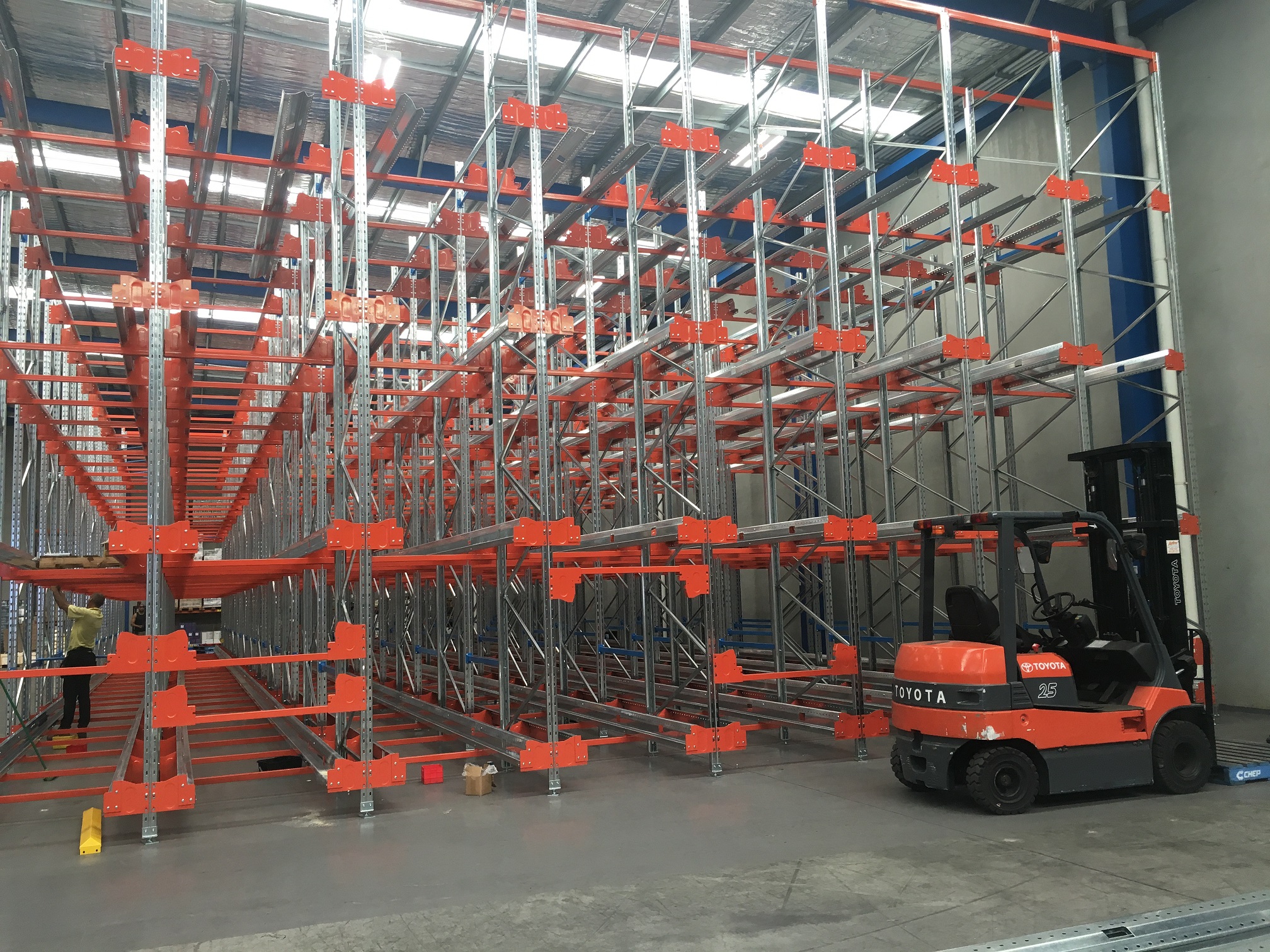
Before looking at the four-way version, it helps to understand the fundamentals of shuttle racking. A motorised shuttle operates inside the storage lanes, carrying pallets into and out of the racking rather than requiring a forklift to enter each lane.
A forklift places or retrieves pallets at the appropriate access point, while the shuttle handles movement within the lane. This reduces the need for forklifts to travel deep into the racking and allows storage lanes to be used more efficiently.
The system can reduce forklift travel within the racking, improve storage density and support more organised pallet handling.
What Are the Main Components of a Four-Way Shuttle Racking System?
A four-way shuttle system is more than just the racking and shuttle itself. A complete automated setup can bring several components together to coordinate pallet storage and retrieval.
Key components can include:
- Racking: The structural framework provides the storage lanes and levels for pallets.
- Four-way shuttles: Motorised units transport pallets through the racking and can change direction to move across the system.
- Pallet lifts: These transfer pallets between different racking levels.
- Conveyors: Pallets can be transported between inbound or outbound areas and the storage system.
- Charging equipment: Charging stations provide the power required to keep the shuttles operating.
- Control software: Software coordinates equipment movements and storage and retrieval tasks.
Together, these components can form a highly automated storage system designed around the warehouse’s layout, inventory and operational requirements.
What Is the Difference Between a Two-Way and Four-Way Shuttle?
A standard two-way pallet shuttle generally moves forwards and backwards within a single storage lane. It is commonly used as part of a semi-automated system, with a forklift required to relocate the shuttle between different lanes.
A four-way shuttle operates differently. It can move both longitudinally along a storage lane and transversely across the racking system. This means the shuttle can move between lanes without requiring a forklift to physically relocate it.
The four-way shuttle can also integrate with conveyors, pallet lifts and control software to form a more comprehensive automated storage and retrieval system.
How Does a Four-Way Shuttle Change Direction?
The ability to travel in four directions is one of the defining characteristics of the system.
When a four-way shuttle reaches the cross-aisle rails, it changes the orientation of its wheels. This allows it to move from longitudinal travel along the storage lane to transverse travel across the racking system.
This flexibility allows a single shuttle to serve multiple storage locations and navigate a larger racking grid without being manually lifted and repositioned.
How Does a Pallet Move Through a Four-Way Shuttle System?
Consider a pallet arriving at the warehouse for storage. The journey can involve several coordinated steps:
- An operator creates or confirms an inbound task in the warehouse management system.
- The system automatically allocates a suitable storage location.
- The pallet enters the storage system via the conveyor.
- A pallet lift transfers it to the required racking level.
- A four-way shuttle collects the pallet.
- At the cross-aisle rails, the shuttle changes its wheel orientation so it can move in four directions.
- The shuttle transports the pallet to the allocated storage location.
- During retrieval, the system coordinates the equipment to complete the process in reverse.
This coordination allows storage and retrieval activities to be managed as a connected process rather than as a series of independent manual movements.
What Roles Do WMS and WCS Play?
The warehouse management system (WMS) and warehouse control system (WCS) have different roles within an automated warehouse.
The WMS manages the warehouse-level requirements. It can determine what inventory needs to be stored or retrieved, allocate storage locations and create the relevant warehouse tasks.
The WCS focuses on controlling the automated equipment. It coordinates components such as conveyors, pallet lifts and shuttles so that the physical movements required to complete the WMS task occur in the correct sequence.
In simple terms, the WMS determines what needs to happen, while the WCS helps coordinate how the automated equipment makes it happen.
What Efficiency Gains Can Four-Way Shuttle Racking Provide?
The benefits of four-way shuttle racking depend on the warehouse design, inventory profile and level of automation required. Potential advantages include:
- Higher storage density by reducing operating aisle requirements
- More efficient use of available floor and vertical space
- Automated pallet movement within the storage system
- Reduced forklift travel within racking
- Flexible movement between storage lanes
- Integration with conveyors and pallet lifts
- Reduced manual handling
- More coordinated storage and retrieval processes
These benefits can be particularly relevant where warehouse space is limited and businesses need to increase pallet capacity without significantly expanding their footprint.
Is Four-Way Shuttle Racking Right for Your Warehouse?
Four-way shuttle systems can suit operations that require high-density pallet storage and coordinated material handling. They may be considered for environments such as logistics, distribution, food storage and other high-volume operations where efficient use of warehouse space is important.
However, the right system depends on factors including the building layout, pallet requirements, storage capacity, inventory movement and desired level of automation. A detailed warehouse assessment is therefore important before selecting a system.
How Can BHD Storage Solutions Help?
BHD Storage Solutions provides warehouse racking design, consultation, installation and project management services, helping businesses develop storage systems around their operational requirements.
If you are considering four-way shuttle racking or another high-density shuttle racking solution, speak with BHD Storage Solutions about your warehouse layout, storage requirements and automation goals. Our team can help you assess the available options and develop a solution designed around your operation.